Flea and tick suppression establishes a continuous chemical barrier around residential grounds, disrupting pest reproduction without indiscriminate indoor baseboard soaking. Retail foggers and store-bought pyrethroid…
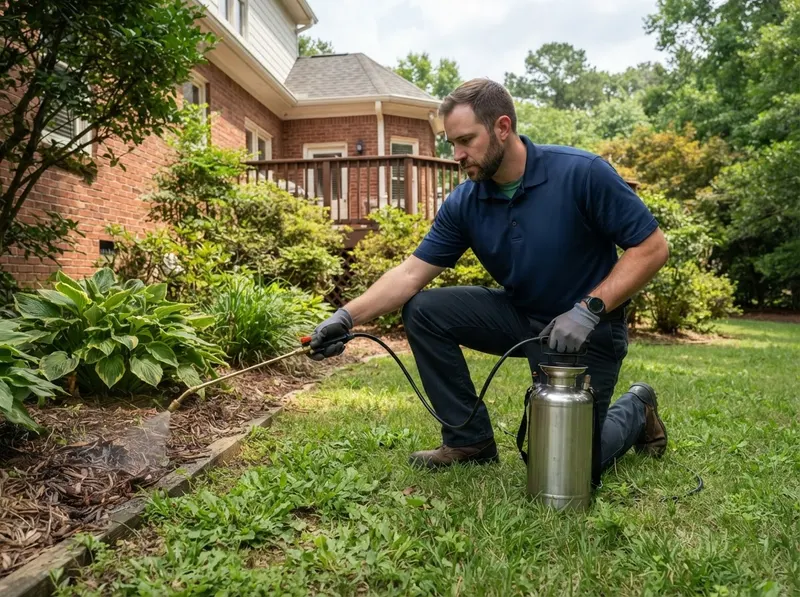
Flea and tick suppression establishes a continuous chemical barrier around residential grounds, disrupting pest reproduction without indiscriminate indoor baseboard soaking. Retail foggers and store-bought pyrethroid sprays disperse adult parasites temporarily, driving them further into unmanaged brush or under subfloors. In contrast, clinical barrier suppression combines residual adulticides with microencapsulated insect growth regulators (IGRs) like pyriproxyfen. This compound stops immature flea larvae from spinning cocoons and arrests tick nymphs before they reach reproductive stages, completely breaking the lifecycle in the soil.
Pest behavior in Fulton County is directly shaped by Atlanta’s dense tree canopy and subtropical humidity. In historic neighborhoods like Grant Park, Inman Park, and Virginia-Highland, deep oak leaf litter, ivy beds, and elevated crawlspaces provide high-humidity microclimates where fleas and blacklegged ticks thrive through October. In Buckhead Forest and Collier Hills, residential properties bordering ravines or dense landscape buffers face constant re-infestation via urban wildlife corridors containing squirrels, opossums, and white-tailed deer. Suppression protocols target these ecotones directly: moist pine straw beds, property fencelines, under-deck dirt pads, and low-hanging vegetation.
The service sequence uses a structured three-step barrier process. First, technicians map exterior moisture pockets, wildlife harborage areas, and pet zones around lawns and patios. Second, high-volume hydraulic or low-drift mist rigs place microencapsulated barrier materials onto targeted foliage and ground surfaces up to 24 inches off grade, drying completely within 60 to 120 minutes. Third, water-activated granular growth regulators are embedded into shaded soil beds and crawlspace perimeters to maintain soil-level residual efficacy through routine rainfall. Homeowners must treat domestic pets with veterinarian-approved flea and tick topicals concurrently, as chemical yard suppression secures the exterior perimeter but does not address live ectoparasites living directly on canine or feline hosts.
Every job gets a firm, written price after a free on-site visit.
Tell us about your flea and tick suppression job in Atlanta and we'll send a clear, written quote, usually the same day.
 PestSentry Pest Control