Crawlspace pest exclusion in Atlanta fortifies the primary vulnerability of regional home architecture. Raised-pier foundations, common across 1920s bungalows in Virginia-Highland, Grant Park, Inman Park, and…
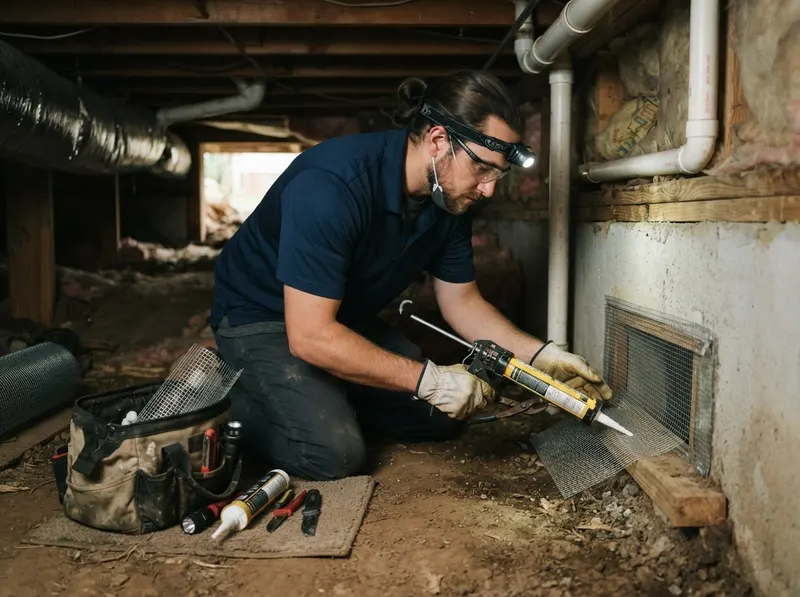
Crawlspace pest exclusion in Atlanta fortifies the primary vulnerability of regional home architecture. Raised-pier foundations, common across 1920s bungalows in Virginia-Highland, Grant Park, Inman Park, and Cabbagetown, naturally harbor damp, unconditioned air beneath the floorboards. Rodents and smokybrown cockroaches exploit gaps as narrow as one-quarter inch around subfloor plumbing drops, electrical conduits, and rusted stamped-metal vent screens. Rather than applying surface insecticides that fail to halt outdoor migration, crawlspace exclusion treats the building envelope as a physical barrier. Technicians mechanically fasten 19-gauge galvanized wire cloth over masonry crawlspace vents and secure copper mesh bound with elastomeric sealants around plumbing lines beneath bathrooms and kitchens. This approach contains structural perimeters without pesticide exposure inside indoor air ducts, preventing airborne chemical triggers around children or household pets.
Selecting crawlspace pest exclusion over chemical-only treatments shifts pest management from recurring remediation to passive defense. Surface chemical applications degrade within 60 to 90 days under humid Fulton County conditions, requiring ongoing visits to suppress returning colonies. Mechanical exclusion alters the physical access points permanently, eliminating the need for mandatory 12-month spraying contracts. In brick-and-mortar homes throughout Collier Hills, Midtown, and Buckhead Forest, subfloor HVAC ducting frequently runs through unencapsulated crawlspaces. If rodents chew through flex-duct outer jackets, nesting materials and pathogens infiltrate indoor HVAC air streams. Sealing sill plates, rim joists, and masonry-to-wood transitions preserves duct integrity and subfloor insulation without driving pests upward into drywall cavities.
Structural execution follows an orderly technical sequence to guarantee containment. First, technicians survey the crawlspace perimeter, mapping daylight gaps along the masonry curtain wall and measuring clearance under foundation access doors. Second, existing damaged screening on foundation vents is removed and replaced with quarter-inch galvanized hardware cloth, secured with masonry anchor screws. Third, interior utility penetrations, including main water lines, HVAC linesets, and sewer chases, are packed with non-corroding copper mesh and industrial-grade expanding foam barrier compound. Fourth, access doors receive reinforced heavy-gauge hinges, weather-stripping gaskets, and locking latches to deter burrowing rodents. Properties with active subfloor moisture accumulation or severe insulation damage receive specific recommendations to stabilize humidity, ensuring exclusion barriers maintain structural integrity against fungal decay.
Every job gets a firm, written price after a free on-site visit.
Tell us about your crawlspace pest exclusion job in Atlanta and we'll send a clear, written quote, usually the same day.
 PestSentry Pest Control